AI-Enabled ERP for Hygiene Products Manufacturer
A fast-growing hygiene products manufacturer was experiencing complete disconnection across its internal operations. Procurement lacked visibility into production schedules, Sales had no real-time view of available stock, and Finance was working from outdated information. Without a unified data source, the organization faced both overstocking of certain materials and critical shortages of others.
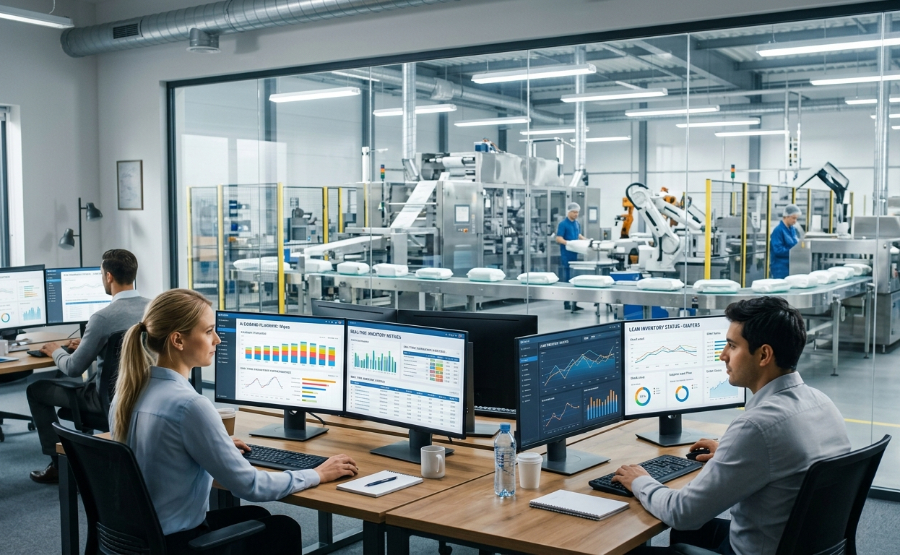
Solution
Built a full-company ERP spanning production, procurement, sales, warehouse, and finance, featuring an AI demand-planning module that calculates material requirements against supplier lead times to support Lean Inventory without risking line stoppages.
The core architectural principle is simple: every module feeds the others. When a sales order is confirmed, production planning is updated immediately, which in turn updates material requirements and shows procurement exactly what needs to be ordered and when, while accounting for each supplier's delivery lead time.
Key Achievements
-35%
Reduction in raw material inventory value compared to the previous 6 months
0
Production stoppages due to material shortages over 12 months
-25%
Reduction in time from sales order creation to production scheduling
Stack & Architecture
Frontend
All UI for ERP solution
React + TypeScript
Backend
Business logic, MRP engine, AI model serving
Java / Spring Boot
AI / ML
Demand forecasting and stock calculation
Prophet + XGBoost
Database
Single source and data storage
PostgreSQL
Barcode
Warehouse goods movements, goods receipt
Zebra / mobile scan
Infrastructure
Hosted SaaS infrastructure
AWS
Key Features
Production Planning
Real-time production visibility and cross-department coordination for production orders, materials, and work-in-progress across all product lines (maxi pads, medical garments, gloves, wet wipes), with clear control across departments.
AI Demand Forecasting
Machine learning model forecasts demand per SKU from order history, seasonality, and customer patterns to help reduce stockouts and lower excess inventory. It feeds directly into Material Requirements Planning (MRP) to improve vendor planning by specifying order timing and quantities based on vendor lead times.
Lean Inventory
Calculates dynamic reorder points and safety stock levels per material based on demand variability and supplier reliability, helping inventory managers lower carrying costs and reduce stockouts.
Procurement Management
Streamlines supplier records, purchase orders, goods receipts, and three-way matching (PO / GR / invoice) to improve control and efficiency across procurement operations, while automatically generating Lean Inventory recommendations for buyer review and approval.
Warehouse & Inventory
Bin-level inventory tracking across raw materials, WIP, and finished goods with barcode-based movements for full traceability. Improve warehouse workflows with real-time stock valuation and lot/expiry date tracking for perishable items, while reducing stockouts and keeping inventory under control.
Finance & Management Reporting
Automate accounts payable, accounts receivable, COGS, and product margin reporting directly from operational data to give financial operations leaders on-demand management P&L visibility without waiting for month-end close.
Previous attempts to reduce stock failed because teams did not trust static minimum stock levels. The AI model improved inventory optimization by making reorder points dynamic and explainable, so buyers could see exactly why a specific quantity was recommended based on demand forecasts and supplier lead times.