Clinic Resources and Supply Management with AI Demand Forecasting
The clinical team had no real-time visibility into item availability across locations. Equipment sat idle at one site while another borrowed from a third. Consumable orders were based on the previous month's usage plus a manual buffer, so stock levels rarely matched the actual patient mix coming through the door.
The result was a cycle of preventable strain: high-acuity weeks left the clinic short on critical supplies, while low-acuity weeks left expensive consumables sitting unused until they expired. The need for a better inventory system was clear.
Solution
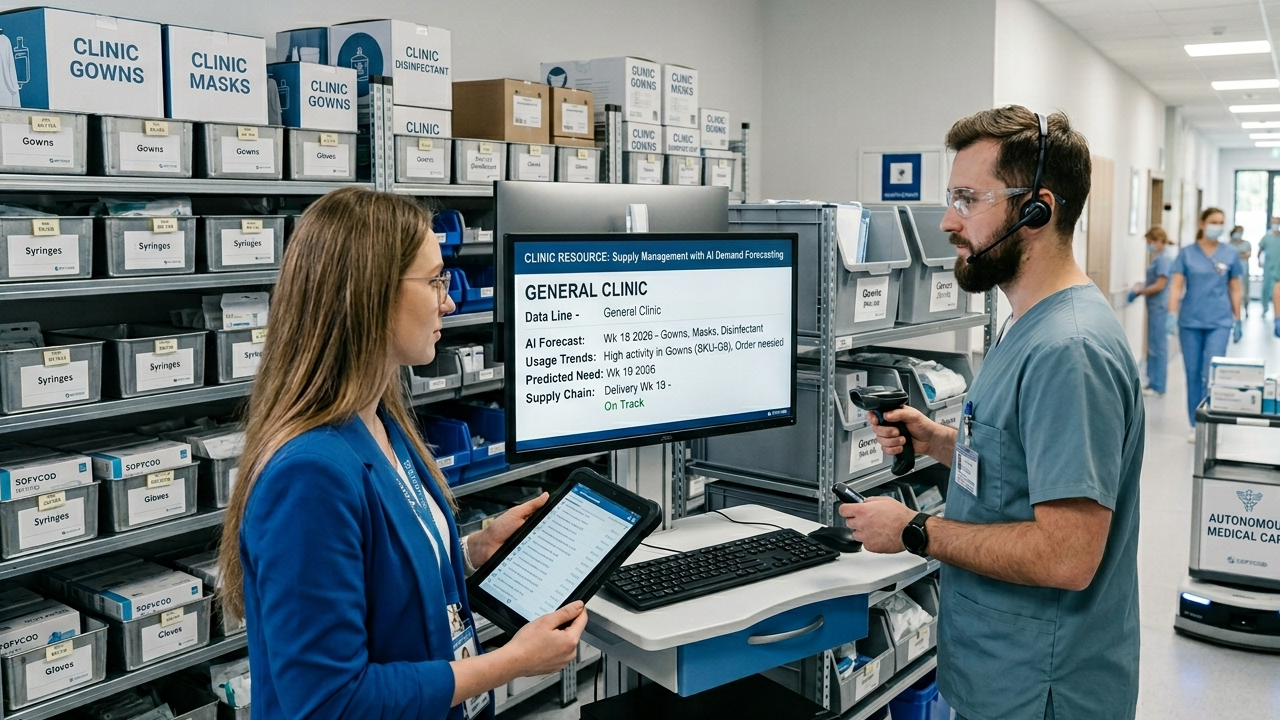
We built a real-time resource and supply management platform for clinical operations to address a common challenge: keeping equipment, consumables, and demand aligned across fast-moving care settings. The solution combines equipment tracking, consumable inventory, and AI-driven demand forecasting, with Lean Inventory principles applied to clinical consumables (excluding medication management).
A key strategic decision was to connect the supply forecasting engine directly to the EMR. For clinical operations leaders, this matters because patient census, admission diagnoses, and planned procedures are far more reliable predictors of consumable demand than backward-looking order histories, enabling tighter inventory control and more responsive operational planning.
Key Achievements
-20%
Consumables expenditure through waste and over-ordering reduction
0%
Cases of critical consumable shortages
-15%
Expired consumable write-offs compared to the previous 6-month period
Stack & Architecture
Frontend
All UI for Clinic Management System
React + TypeScript
Backend
Inventory engine, forecasting model serving, EMR sync
Java, Spring Boot
AI/ML
Consumable mapping and demand forecasting
XGBoost + Proprietary rules
Database
Single source and data storage
PostgreSQL
EMR Integration
Seamless integration with Epic
HL7 FHIR R4.0
Infrastructure
HIPAA-compliant, Hosted SaaS architecture
AWS
Key Features
Real-Time Bed & Capacity Tracking
Live occupancy dashboard for each ward, each site, and across the enterprise. Integrates with the EMR to receive admission and discharge updates in real time, and forecasts occupancy for the next 7 days using planned admissions and historical patterns.
AI Demand Forecasting
Our solution analyzes EMR data, including patient census, admission diagnoses, and procedure schedules, to precisely map expected consumable types and quantities. It delivers a 14-day supply forecast that helps hospitals improve inventory efficiency and stay ready with the materials they need.
Consumable Inventory Management
Real-time stock visibility by item and location — ward, storeroom, and procedure room powered by barcode-based consumption tracking. AI-driven reorder points replace static par levels, while expiry monitoring and waste alerts help reduce losses and keep inventory under control.
Equipment Asset Management
Gain complete visibility into clinical equipment across all sites: from monitors and infusion pumps to surgical instruments and diagnostic devices. Track asset status in real time, including available, in use, in maintenance, and decommissioned, and leverage utilization reporting to identify idle equipment ready for redeployment.
EMR Integration
Enterprise-grade bi-directional HL7 FHIR R4 integration reads patient census, diagnoses, and procedure schedules while writing consumption data back to patient records for clinical costing. Epic compatible.
Operations Dashboard & Reporting
Site managers and group leaders get clear dashboards that track consumption versus forecast, waste and expiry metrics, and cost per patient day by consumable category. When one site has surplus and another faces a potential shortage, the system provides inter-site transfer recommendations to help balance supply.
Previous attempts at stock reduction failed because they relied on static minimum stock levels that did not reflect real-time operational needs. The AI model improves business performance by making reorder points dynamic and explainable, helping reduce stockouts, lower excess inventory, and speed up staff decisions by showing exactly why a specific quantity is recommended based on demand forecasts and supplier lead times.